Money & currencies
Kenya, Uganda and Tanzania each have their own currency, payment systems and money quirks. Here's what to know before you land.
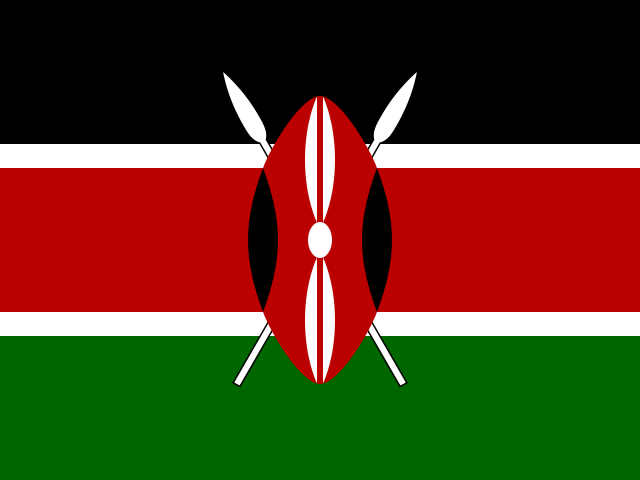
USD widely accepted in upscale hotels, shops and tourist areas. Always negotiate in local currency at markets.
Visa and Mastercard widely accepted in Nairobi. Less reliable in Mombasa outside hotels.
M-Pesa is dominant — and world-class. Get a Safaricom SIM at the airport and register for M-Pesa. You can pay for matatus, markets, restaurants, petrol. It works everywhere.
Equity Bank, KCB, Co-op and Stanbic ATMs reliable in Nairobi. Carry cash for upcountry.
- Get KES at the airport or large city ATMs — better rates than changing abroad
- Avoid money changers on the street — use banks or official forex bureaus
- Daily ATM withdrawal limits are around KES 40,000 ($300) per card
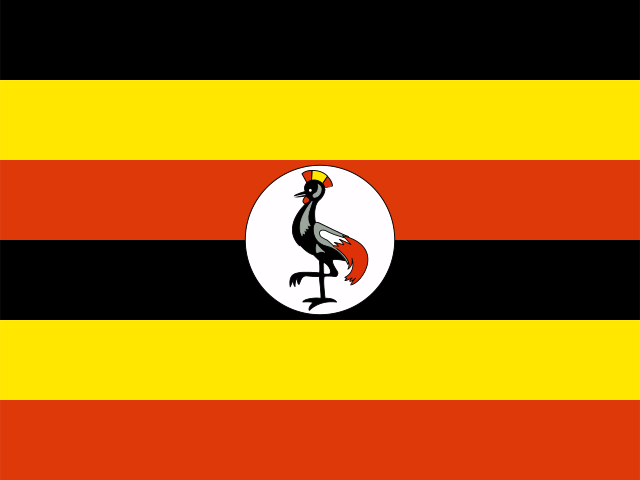
USD accepted in hotels and some restaurants. Notes must be clean and printed after 2009 — torn or old notes are refused.
Visa accepted in Kampala's upscale hotels and supermarkets. Carry cash for most markets and transport.
MTN Mobile Money and Airtel Money are both strong in Uganda. Get a local SIM at Entebbe airport and register immediately — you'll need it for boda boda payments.
Stanbic, DFCU, Centenary Bank ATMs in Kampala are reliable. Limited outside the capital — carry enough cash if travelling outside Kampala.
- Large denomination USD notes (50s and 100s) get better exchange rates in Uganda
- Forex bureaus in Kampala's city centre offer better rates than banks for cash exchange
- Budget for boda boda trips daily — they're cheap but you need shillings
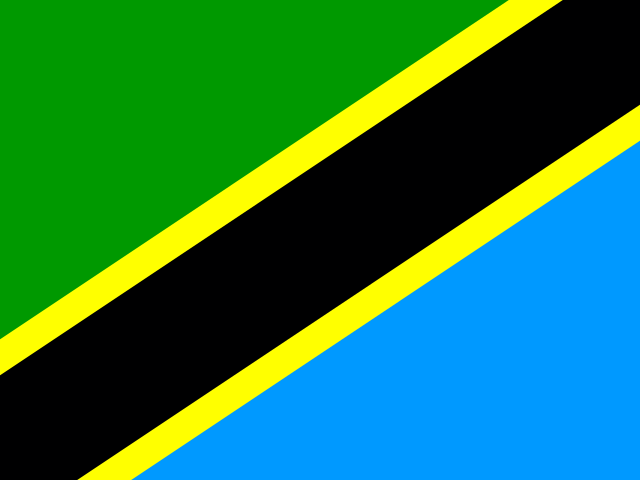
USD widely accepted in Dar es Salaam hotels, safari operations and tourist services. Required for national park fees.
Visa and Mastercard work at larger hotels and supermarkets in Dar. Less reliable elsewhere.
Vodacom M-Pesa (separate from Kenya), Tigo Pesa and Airtel Money all operate. Get a local SIM at Julius Nyerere airport. Less ubiquitous than Kenya's M-Pesa but growing.
CRDB, NMB and Stanbic ATMs reliable in Dar. Dispense TZS — bring USD for national parks.
- Tanzania requires a separate visa (not covered by the East Africa Tourist Visa)
- National parks must be paid in USD — carry at least $200 in clean notes if visiting Serengeti
- Dar restaurants in Masaki/Oyster Bay area are card-friendly — city centre less so
Universal money tips
Always carry USD
USD is the universal East Africa backup. Carry $200–$300 in mixed denominations ($5, $10, $20, $50). Small bills are often more useful than $100 notes outside cities.
Mobile money first
Get a local SIM with mobile money in each country. M-Pesa (Kenya), MTN Mobile Money (Uganda), Vodacom M-Pesa (Tanzania). Register at the airport kiosk — it takes 10 minutes.
Notify your bank before you travel
Tell your bank you're travelling to East Africa. Banks often freeze cards on unfamiliar transactions. Do this for every card you're bringing.
ATMs work — but have a backup
ATMs in major cities are generally reliable. But they run out of cash before big match days. Withdraw enough the night before a match — don't rely on game-day ATM access.
Exchange in-country, not abroad
You'll get significantly better rates exchanging USD or GBP in Nairobi/Kampala/Dar than you will at a UK or US bureau de change. Don't over-exchange before you leave.
Keep receipts from forex bureaus
Official receipts from licensed forex bureaus protect you if questioned. Don't use unlicensed street changers — counterfeit notes are a real risk.
Take the hassle out of it
Our AFCON 2027 packages include in-country transport and hotel — reducing how much local cash you actually need to manage.
View AFCON packages